
When we think of electric vehicles, cars are often the first thing that comes to mind. But now it’s time to look to the sky, because a Swedish company Heart Aerospace has hisThe all-electric demonstrator aircraft X1 has completed its first successful test flight. And it’s the largest battery-electric aircraft ever built.
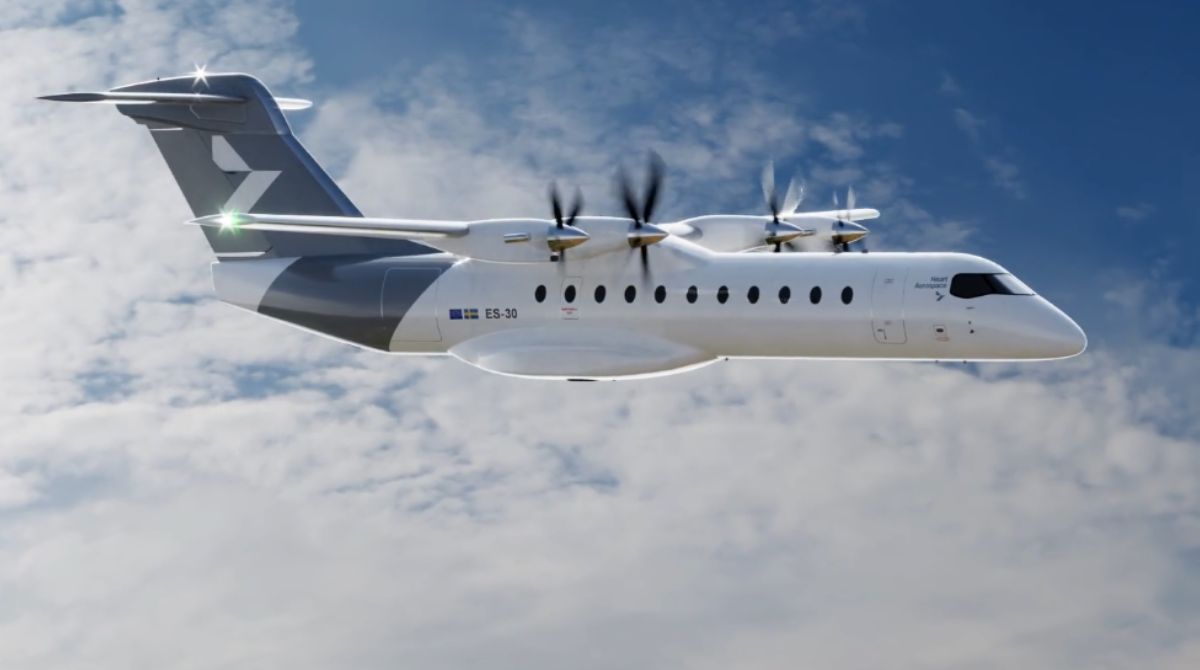
Image Source : heartaerospace
Where and how did this historic flight take place?
According to information from eartaerospace The flight took off from Plattsburgh International Airport in upstate New York, USA. Flying entirely on battery power, the X1 reached an altitude of approximately 1,100 feet and remained airborne for approximately 27 minutes. The total electricity consumed by the aircraft during the entire process, from takeoff to landing, cost less than $5. That’s approximately ₹400-450 in Indian rupees. Just imagine, an entire flight for such a low cost! This figure itself speaks volumes about how economical electric aircraft can be compared to conventional jet fuel.
This success has resonated within the industry. Executives from major airlines like United Airlines and Air Canada have praised the flight and expressed interest in adding electric aircraft to their fleets. This is the ultimate confidence boost for any new technology when industry leaders come together.
Read More:
- A cheap way to upgrade PS5 before the GTA 6 launch has emerged, great news for fans.
- Apple releases rare ‘point’ beta updates of iOS 26.6.1 and macOS 26.6.2
The next step: the dream of the ES-30
Engadget report says that the X1 is merely a demonstrator, a test model to prove the technology. The real product is the ES-30, a 30-seat hybrid fixed-wing aircraft. It is being designed specifically for short-haul flights between smaller and regional airports, routes currently served by smaller turboprop aircraft like the Embraer ERJ.
The company aims for the aircraft to fly about 125 miles (about 200 kilometers) in all-electric mode, while adding a hybrid engine could increase the range to 500 miles (about 800 kilometers). Heart Aerospace says That their aircraft will prove to be much cheaper to operate, not only because of the cheaper electricity, but also because of the lower maintenance and better reliable performance of the electric motor.
And most importantly, it will initially be flown with a pilot, but the company is confident that in the future, this aircraft can be made fully autonomous, meaning capable of flying without a pilot. Imagine, perhaps tomorrow we will be flying planes that fly on their own.
Is this really the future of flight?
Heart Aerospace currently aims to have the ES-30 in service by 2031, though this timeline is considered quite ambitious in the aviation industry. And it’s not alone in the race. Companies like Boom Supersonic, Harbour Air, ZeroAvia, and Rolls-Royce are also working to reshape the future of flight in their own ways.
In particular, the true future of electric aviation depends on how quickly battery technology can make aircraft lighter and denser. Until batteries are as light and powerful as those in cars, large-scale commercial electric aircraft may not be feasible.
Nevertheless, this flight of the X1 is a small but powerful step forward. It proves that electric aviation is no longer just a fantasy. It has become a concrete experiment moving towards reality. If all goes according to plan in the coming years, perhaps our next short plane trip could be in a quiet, pollution-free electric aircraft.
Read More: